

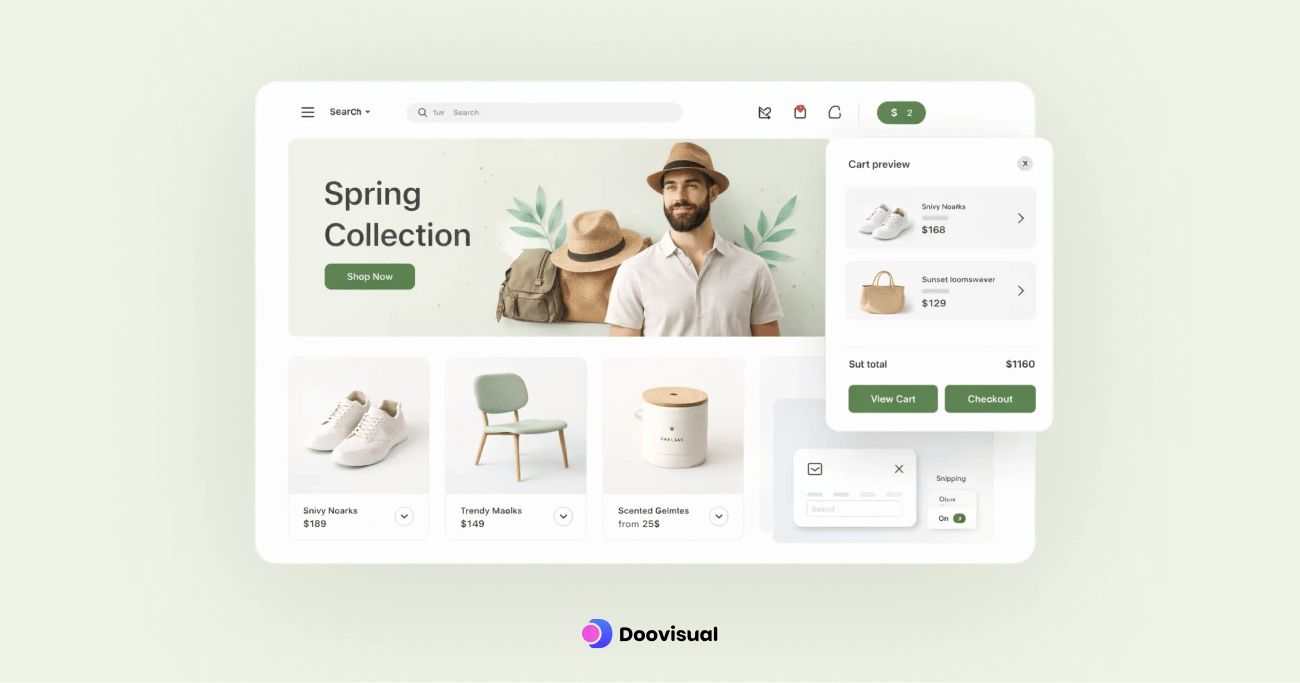
Shopify has made launching an ecommerce store easier than ever. In 2026, the challenge is no longer how to get online, but how to design a Shopify website that actually converts, retains customers, and scales with growth.
Every day, users land on Shopify stores that look “fine” but fail to build trust, explain value, or guide decisions. The result is predictable: high bounce rates, low conversion rates, abandoned carts, and wasted ad spend.
Shopify website design today is not about choosing a theme and uploading products. It’s about designing an experience that aligns user intent, brand positioning, and conversion psychology.
This guide breaks down Shopify website design from a strategic perspective—covering UX principles, structural decisions, and design choices that separate high-performing stores from the rest.
What Shopify Website Design Really Means in 2026
Many founders still think Shopify website design equals visuals. In reality, it’s the intersection of UX, branding, and ecommerce strategy.
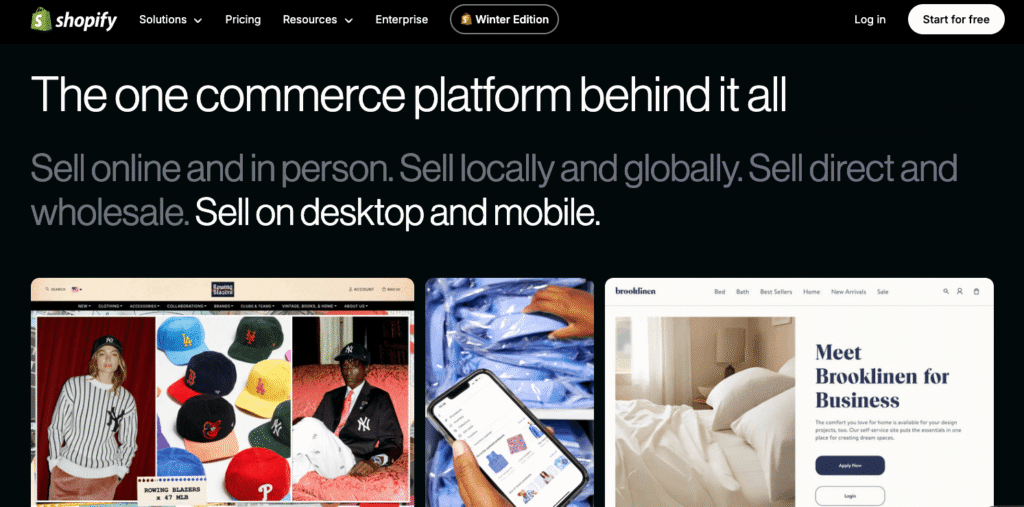
A well-designed Shopify store does three things consistently:
- Builds trust within the first few seconds
- Helps users make confident purchase decisions
- Removes friction at every step of the buying journey
In 2026, ecommerce users are more impatient and more informed than ever. Studies consistently show that users form a first impression of a website in under 0.05 seconds, and over 70% of shoppers say website design influences whether they trust a brand.
This means design is not decoration—it’s persuasion.
A modern Shopify website design must account for:
- Mobile-first behavior (more than 60% of ecommerce traffic now comes from mobile)
- Speed and performance expectations
- Clear information hierarchy
- Brand credibility in crowded markets
Ignoring any of these leads to lost revenue, regardless of how good the product is.
Why Shopify UX Has a Direct Impact on Ecommerce Conversions
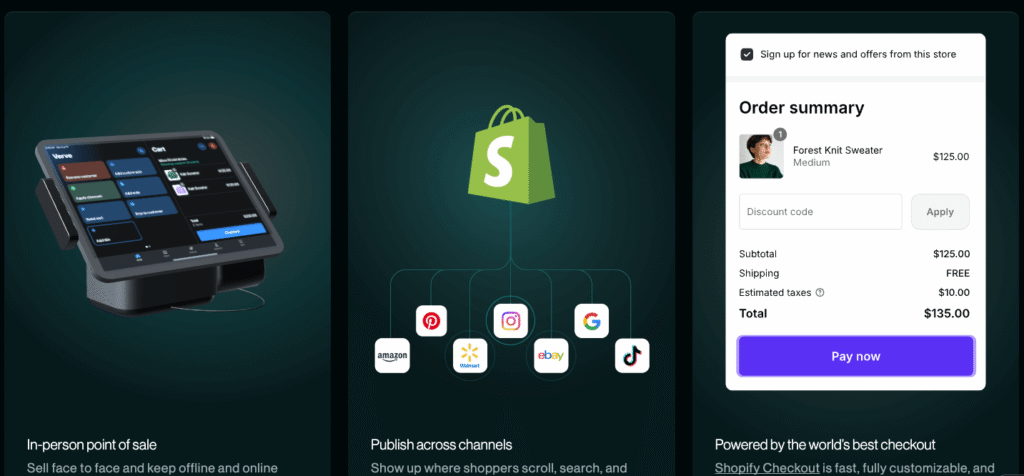
Conversion rate is the clearest signal of whether a Shopify design works.
Across ecommerce benchmarks, the average Shopify conversion rate ranges between 1.4% and 2.5%, while top-performing stores consistently exceed 4–5%. The difference is rarely product quality alone. It’s almost always UX.
Good Shopify UX reduces cognitive load. It answers questions before users ask them. It guides attention to what matters most.
Key UX factors that influence conversion include:
- How quickly users understand what you sell
- How easily they can compare options
- How confident they feel about checkout and post-purchase experience
When UX fails, users hesitate. Hesitation kills conversions.
In practical terms, this means Shopify website design must prioritize:
- Clear value propositions above the fold
- Obvious next steps
- Minimal distractions during purchase decisions
Design that looks impressive but creates confusion is still bad design.
The Core Structure of a High-Converting Shopify Website
A common mistake founders make is designing pages in isolation. Shopify stores convert best when structure and flow are treated as a single system.
Let’s break down the essential components.
Homepage Design: Where Trust Is Won or Lost
The homepage is not a catalog. It’s a decision gateway.
Within seconds, users should understand:
- What the brand sells
- Who it’s for
- Why it’s different
High-performing Shopify homepages focus on clarity, not creativity for its own sake. They use strong visual hierarchy to guide attention from value proposition to proof to action.
In 2026, effective Shopify homepages typically include:
- A clear hero section with a single core message
- Visual cues that reinforce product value
- Social proof such as reviews, press mentions, or usage numbers
When the homepage tries to say too much, users disengage. Focus wins.
Collection Pages: Helping Users Browse With Confidence
Collection pages are often treated as simple product grids. That’s a missed opportunity.
From a UX standpoint, collection pages exist to help users narrow choices, not overwhelm them. The more products you offer, the more important UX becomes.
Effective Shopify collection page design emphasizes:
- Clear filtering and sorting options
- Visual consistency across products
- Scannable information (price, variants, key benefits)
Research in ecommerce psychology shows that too many choices can reduce conversions by increasing decision fatigue. Good design mitigates this by guiding users, not forcing them to think.
Product Page Design: Where the Sale Is Made
If there’s one place where Shopify UX directly affects revenue, it’s the product page.
High-converting product pages don’t rely on flashy visuals alone. They focus on answering objections.
Users typically want to know:
- What problem does this product solve?
- Is it right for me?
- Can I trust this brand?
- What happens after I buy?
Well-designed Shopify product pages address these questions through layout, content structure, and visual cues. The goal is to make the decision feel obvious and low-risk.
In 2026, strong product pages balance:
- High-quality imagery
- Clear benefit-driven copy
- Reviews and trust signals
- Frictionless add-to-cart interactions
Design that forces users to hunt for information is conversion-negative.
Mobile-First Shopify Design Is No Longer Optional
Mobile commerce has crossed a critical threshold. For many Shopify stores, mobile accounts for over 65% of sessions, yet conversion rates on mobile are often significantly lower than desktop.
This gap exists because many stores still treat mobile as a secondary experience.
Mobile-first Shopify design requires more than responsiveness. It requires:
- Thumb-friendly navigation
- Simplified layouts
- Reduced visual clutter
- Faster load times
Google data shows that 53% of users abandon a site if it takes longer than 3 seconds to load. On mobile, this tolerance is even lower.
In 2026, performance, UX, and design are inseparable. A slow or cluttered mobile experience will silently kill revenue.
Shopify UX Best Practices That Still Matter in 2026
Despite changing tools and trends, certain UX principles remain timeless.
Successful Shopify websites consistently:
- Use whitespace intentionally to improve readability
- Maintain strong contrast for accessibility
- Follow predictable navigation patterns
- Prioritize clarity over cleverness
These principles are not about playing it safe. They’re about respecting user behavior.
The best Shopify designs feel effortless because the user never has to think about how to use the site—they just move forward.
This is where experienced design partners like Doovisual focus their effort: designing ecommerce experiences that feel intuitive, scalable, and aligned with real buying behavior, not just visual trends.
Why Many Shopify Themes Fail Growing Brands
Shopify themes are a great starting point. They’re fast, affordable, and accessible. But most themes are built for generic use cases, not growing brands.
As traffic, products, and expectations grow, themes often become limiting:
- UX customization becomes constrained
- Brand differentiation suffers
- Performance optimizations are harder
- Conversion improvements plateau
This is why many successful Shopify stores eventually move beyond themes and invest in custom design.
Theme-based design isn’t bad—but it has a ceiling. Understanding when you’ve hit that ceiling is critical.
Custom Shopify Design vs Themes: The Real Trade-Offs
Shopify themes have improved significantly over the last few years. In 2026, many themes look polished, load quickly, and follow basic UX standards. For early-stage brands, themes are often the right starting point.
The problem begins when growth exposes their limits.
Themes are designed for broad use cases. They assume:
- Simple product catalogs
- Minimal brand differentiation
- Standard buyer journeys
As soon as a store grows beyond these assumptions, friction appears. Navigation becomes cluttered. Product discovery suffers. Customization starts to feel like a workaround rather than a solution.
Custom Shopify design, on the other hand, is built around your specific business model. Instead of forcing your product and brand into a pre-defined layout, the experience is shaped around how users actually browse, compare, and buy.
From experience, the inflection point usually appears when:
- Monthly revenue crosses a consistent threshold
- Paid traffic increases and conversion efficiency matters more
- Product lines expand or diversify
- Brand positioning becomes a competitive lever
At that stage, custom design often delivers measurable returns because it removes friction themes cannot address.
How Custom Shopify Design Improves Conversion Over Time
Conversion optimization is rarely about one big change. It is the accumulation of small improvements that reduce hesitation.
Custom Shopify website design enables:
- Clearer information hierarchy on product pages
- Tailored collection layouts based on product type
- Checkout experiences optimized for your audience, not a generic one
Data from ecommerce CRO studies consistently shows that even a 0.5% increase in conversion rate can translate into significant revenue growth at scale. For stores processing thousands of sessions per day, UX improvements often outperform paid acquisition in ROI.
What matters is not whether a site looks custom. What matters is whether the design:
- Reduces cognitive load
- Speeds up decision-making
- Builds confidence at each step
Themes can achieve some of this. Custom design allows you to optimize all of it.
Common Shopify Website Design Mistakes That Hurt Sales
Most Shopify stores do not fail because of bad products. They fail because the design introduces unnecessary friction.
One of the most common mistakes is overloading pages with information. Founders often try to say everything at once, assuming more detail equals more trust. In reality, this overwhelms users and delays decisions.
Another frequent issue is weak visual hierarchy. When every element competes for attention, nothing stands out. Users miss key messages, CTAs lose impact, and conversion paths become unclear.
Mobile UX is another silent revenue killer. Many stores technically work on mobile but are not designed for mobile behavior. Buttons are too small. Navigation requires precision. Important information is buried below the fold. Given that mobile traffic often exceeds 60%, this gap directly impacts revenue.
Finally, inconsistent branding across pages erodes trust. When typography, spacing, and tone shift from page to page, users subconsciously question credibility. Trust is fragile in ecommerce. Design consistency protects it.
Shopify Website Design and Performance Are Connected
In 2026, performance is a design responsibility.
Google’s Core Web Vitals continue to influence both SEO and user behavior. Slow-loading Shopify stores experience:
- Higher bounce rates
- Lower average session duration
- Reduced conversion rates
Even a one-second delay in load time can reduce conversions by up to 7%. On mobile networks, the impact is often greater.
Good Shopify design accounts for:
- Optimized imagery
- Minimal unnecessary scripts
- Clean layout structures that load predictably
Design choices that ignore performance costs often look impressive but perform poorly. High-growth brands treat performance as part of UX, not a technical afterthought.
When It Makes Sense to Hire a Shopify Design Agency
Not every Shopify store needs an agency. Timing matters.
Hiring a Shopify design agency makes sense when:
- The store has validated demand
- Conversion optimization matters more than speed of launch
- Internal teams lack UX expertise
- Brand differentiation is critical
At this stage, design decisions directly affect revenue efficiency. Improving UX often yields higher returns than increasing ad spend.
A strong agency brings:
- Structured UX thinking
- Experience across multiple ecommerce models
- A repeatable process for testing and iteration
Agencies like Doovisual typically work with brands that have moved beyond experimentation and need a Shopify website designed to scale with growth, not just exist.
Shopify Website Design as a Long-Term Growth Asset
The most important mindset shift for founders is to stop viewing design as a one-time project.
High-performing Shopify stores treat design as a growth asset. They evolve it as:
- Product lines expand
- Customer expectations change
- Acquisition channels diversify
Design systems, reusable components, and scalable UX patterns allow stores to adapt without constant redesigns. This reduces long-term costs and improves consistency.
Over time, well-designed Shopify websites also:
- Improve organic search engagement
- Increase repeat purchases
- Strengthen brand recall
These benefits compound. Poor design compounds losses.
Frequently Asked Questions (FAQs)
How much does Shopify website design cost in 2026?
Costs vary widely. Theme-based setups remain the most affordable option. Custom Shopify design typically reflects the complexity of UX, number of templates, and depth of strategy involved. The real question is not cost, but return on investment.
Is Shopify good for high-growth ecommerce brands?
Yes. Shopify supports brands ranging from early-stage startups to global enterprises. Success depends less on the platform and more on how well the website is designed and optimized for users.
How long does a Shopify website redesign take?
A focused redesign usually takes 6–10 weeks, depending on scope. This includes UX planning, design execution, iteration, and developer collaboration.
Does Shopify website design affect SEO?
Indirectly, yes. Good UX improves engagement metrics like time on site and bounce rate. Performance optimization supports Core Web Vitals. Clear structure helps search engines understand content.
Should startups start with a theme or custom design?
Most startups should start with a theme and invest in custom design once growth justifies it. The key is recognizing when the theme becomes a limitation rather than an advantage.
Final Thoughts: Design for Buyers, Not Just Browsers
In 2026, Shopify website design is no longer about standing out visually. It is about guiding users confidently toward purchase.
The stores that win are not the loudest or trendiest. They are the clearest. They respect user behavior. They remove friction. They invest in design decisions that support growth over time.
Whether you start with a theme or move to custom Shopify design, the goal remains the same: create an experience that makes buying feel natural and trustworthy.